




What Makes an Award "Luxury" and Why Most Are Not
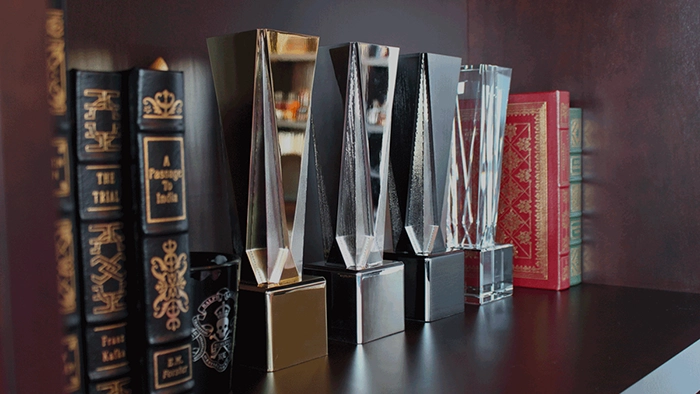
Luxury is not a finish, or a material, and is not achieved through ornament. Luxury, in the context of awards, is the absence of compromise. Most awards attempt to signal importance through addition, such as more facets, shine, or decorative elements, with the assumption is that visual complexity equates to value. In practice, however, the additives achieve the opposite.
The Qualities That Define a Luxury Award
True luxury is reductive. It removes what is unnecessary until what remains feels resolved and there is no excess to distract from the object itself. This is why many award designs that may appear impressive at first glance fail under attention, and especially under execution. They rely on surface rather than substance, and as a result their appeal is immediate and short lived.
A luxury award behaves differently than the rest. A luxury award It does not compete for attention, but holds it. This presence comes from a combination of factors that are rarely discussed openly.
Luxury Awards have Material Honesty
The material should not imitate something else. Metal should feel like metal. Weight should correspond to presence. Finishes should age with dignity rather than degrade.
Luxury Awards have Proportion and Restraint
The object should feel balanced from every angle. Nothing should feel added for effect as every element should justify its existence.
Luxury Awards have Silence in Design
Luxury objects are quiet. They do not attempt to explain themselves and their confidence comes from coherence, not decoration.
Luxury Awards have Permanence
A luxury award is not designed for the moment it is received, but for the years it will be displayed.
Luxury Awards have Branding
The goal of a luxury corporate award is to be at once unique, simple, ownable, artistic, and on brand.
A Custom Design Does Not Guarantee Luxury
What is less understood is that luxury is not determined by whether an award is custom. A custom piece can still be overworked, rushed, or compromised. A pre-existing design can still be fully resolved. The distinction of the awards is integrity, not origin.
An award developed through a true custom process has the advantage of being shaped around a specific moment, if given the time and attention required. At the same time, there are objects that have already been designed to completion; not to be used as templates, but as finished works. Their proportions have been resolved, materials selected without concession, and their presence considered from every angle.
When selected appropriately and personalized with restraint, these objects carry the same qualities that define luxury, and do not feel generic because they were never conceived that way.
The Misstep Most Organizations Make
Organizations unfamiliar with luxury awards may assume that customization alone confers significance, or that selecting an existing design implies compromise. This is a misstep as neither is true. Luxury is not the presence of more but the absence of doubt. An award either holds up under attention, or it does not.
Starting With Standard
The most effective recognition programs understand the dedication to luxury awards, and do not begin with format, but with standard. Whether an award is created specifically for a moment or selected from a body of work that already meets that standard, the expectation remains the same. The luxury award must feel inevitable, must feel considered, and must feel worthy of what it represents. Anything less is not luxury.