




How Corporate Recognition Has Expanded Beyond Employee
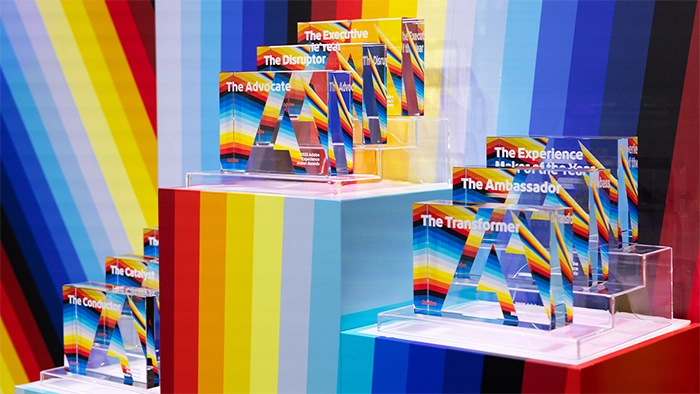
Corporate recognition is often still framed as an internal function, such as employee of the month, years of service, sales or safety performance. That framing alone for corporate awards no longer reflects how many organizations operate as recognition has expanded beyond the boundaries of the company itself.
The Rise of Ecosystem Recognition
Many of the most active and influential programs today recognize what might be more accurately described as stakeholders: customers, users, creators, partners, or participants within a company’s ecosystem who reach defined milestones or levels of achievement. These individuals are not employees, they are not required to participate, their involvement is voluntary, and often visible to others.
Recognition, in this context, is not simply internal reinforcement, but has become part of the experience the organization creates for the people who engage with it. It is how a company signals what it values, not only to its team, but to its entire network.
Milestones Awards as Identity Markers
In these programs, awards are not incidental, but instead mark progression. Examples of this are:
- A creator reaches a threshold.
- A partner achieves a level.
- A user unlocks a milestone that others recognize and aspire to.
The award becomes a visible signal of that achievement within the ecosystem. It is shared, displayed, and discussed. In some cases, it becomes a defining object for the recipient, something that represents a moment of arrival. That changes what the award needs to be, from a simple achievement to an object that conveys meaning.
When Recognition Leaves the Organization
Internal awards are seen by colleagues, and if done nicely, their friends and family. Ecosystem awards are often seen by the world.
They appear in photos, videos, social platforms, and personal spaces. They are interpreted not only by the recipient, but by an audience that may have its own understanding of what the achievement represents.
In that environment, the award reflects directly on the brand. Its design, its material presence, and its overall quality all contribute to how the program is perceived. An object that feels generic or disposable does not remain neutral. It shapes perception.
Why the Standard for Corporate Awards has Changed
Once recognition becomes external, voluntary, and visible, the expectations shift. The award is no longer just a marker of participation but a part of the brand’s relationship with its most engaged audience.
The relationship between a brand and its most engaged audience is not transactional, but built over time, and reinforced through experience, and expressed through objects like corporate awards. This is where many organizations begin to see their recognition programs differently. Not as a cost center, or a procurement exercise, but as a form of brand expression, with the potential to be an efficient cost of goods to maintain relationships and loyalty.
Where Society Awards Fits with Corporate Award Programs
This is the type of work Society Awards is designed for. Programs where recognition must operate at multiple levels - internal and external, individual and collective - while maintaining a consistent standard of design, execution, and delivery.
Custom awards can be developed to reflect the structure and identity of the program itself. At the same time, pre-developed designs, such as the Exclusive Collection, can be deployed for milestone-based recognition where speed and scale are required, without sacrificing quality.
In both cases, the objective remains the same: to create objects that recipients value, and that accurately reflect the organization behind them.
As previously mentioned, the term “corporate awards” no longer captures the full picture. Recognition now extends across entire ecosystems; from employees to customers, partners to creators and communities. Each of these ecosystems come with different expectations, contexts, and levels of visibility. Society Awards designs programs to feel more cohesive, more intentional, and more aligned with how organizations operate today.
A New Standard for Recognition
Recognition has evolved from being confined to the organization to extending outward into the relationships that define the organization. As the evolution continues, the role of the award evolves with it; from a simple object of acknowledgment to something that carries meaning, identity, and presence, both within the organization and beyond it.