




Why Custom Awards Are Not Always Right
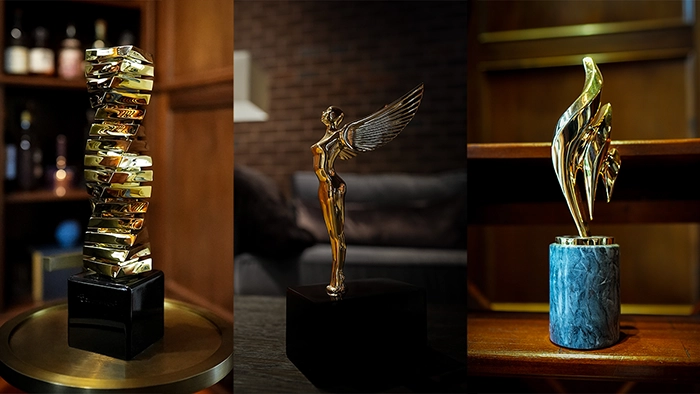
Custom awards are often treated as the highest expression of recognition. The assumption is straightforward; if something is created specifically for a moment, it must be more meaningful than something that already exists. In practice, that is not always true. A custom trophy is not a guarantee of quality but is an opportunity for it.
When a Custom Design Works
When approached correctly, a custom award can become inseparable from the moment it represents. Its form, proportion, and presence can be shaped with precision. It can reflect not only the achievement, but the character of the institution behind it. At its best, custom work produces objects that feel inevitable, as though they could not have been designed any other way.
But that outcome is not automatic. It requires clarity of intent, time for development, and the discipline to refine rather than accumulate. Without those conditions, custom work tends to drift. It becomes overworked, over-explained, or resolved too quickly to reach its full potential.
When a Custom Trophy Becomes a Liability
This is where many organizations misstep. They begin with the assumption that custom trophy is the correct answer, rather than asking whether the conditions exist to support it. When timelines are compressed, when direction is unclear, or when decisions are made reactively, the choice becomes a liability. The result may be unique, but it is not necessarily good. Uniqueness alone is not a measure of value.
The Case for Existing Work
There are also objects, such as the Society Awards Exclusive Collection, that have already been designed to completion, not as templates, but as finished works. Their proportions have been resolved. Their materials selected without compromise. Their presence considered from every angle. These objects are not generic. They are authored. They exist in the same way that other luxury objects exist.
In most categories, one begins with what has already been designed at the highest level. Only when a need cannot be met within that body of work does it become appropriate to create something entirely new. Recognition follows the same logic. Not every moment requires invention, and not every idea improves through customization.
When selected with care and personalized with restraint, these objects can align precisely with a recognition moment. Through proportion, finish, and inscription, they can take on a specificity that feels considered rather than applied. This is a different kind of fit. Less literal, but often more refined.
Choosing Discipline Over Default
Being strategic over choosing type of award, custom or ready-made, also carries another advantage. Objects that originate from a single source, designed with a consistent point of view, do not become diluted through overexposure. Their presence remains controlled. Their identity remains intact.
Many organizations assume that customization alone confers significance, or that selecting an existing design implies compromise. Neither is true. In reality, selecting a resolved work and applying only what is necessary to make it specific is often the more disciplined decision. It avoids forcing ideas into timelines that cannot support them. It avoids overworking forms in an attempt to justify customization. It begins with something that is already complete, and respects it.
Start the Luxury Awards Journey With Intent
The most effective recognition programs understand the distinction. They do not begin with a format. They begin with intent. If a moment calls for something entirely new, and the conditions exist to do it properly, a custom trophy is the right path. If those conditions are not present, the answer is not to proceed anyway but to select from objects that already meet the standard required.
In both cases, the objective is the same: to create something that holds up under attention, feels considered, and does not need to explain itself. Recognition is not defined by how something was made but by how it is perceived, and how it endures.